
Currently browsing: Real Estate
Make Magic In Orlando With Feng Shui!
Are you looking to improve the energy of your home or office in Orlando or the greater Central Florida area? Feng Shui is an ancient Chinese art and science of placement. It can help you create a space that supports your goals and brings out your best.

What are Feng Shui Consultations?
Feng Shui consultations involve an expert evaluating the energy of your home or office. This happens either in-person or remotely via video chat. your consultant will them offer recommendations for improvement. These recommendations may include rearranging furniture and adding or removing items. Many consultants will use the Bagua map to help you understand the energy of different areas of your home or office.
There are many benefits to incorporating Feng Shui into your home or office. Common reasons to get a consultation include increased productivity, improved relationships, and a sense of life balance. Many of my clients, for instance, say that they have experienced enhanced health, wealth, relationships, passion, careers, and even fertility after consulting with me.

What’s Involved?
If you’re interested in a Feng Shui consultation anywhere in and around Orlando in Central Florida, here are a few things to consider:
- Choose an expert: It’s important to choose a Feng Shui expert who has the training and experience to provide accurate and helpful recommendations. Look for someone who has a good reputation and is knowledgeable about the principles of Feng Shui.
- Prepare for the consultation: Before your consultation, take the time to declutter your home and gather any materials that may be useful to the expert, such as floor plans or photos of your home (especially helpful for remote sessions).
- Be open to change: Feng Shui recommendations may involve making changes to your home or office that may be a little outside of your comfort zone. It’s important to be open to these changes and trust the process in order to fully benefit from the process.

By following these tips, you can take the first steps towards enhancing the energy of your home or office. With the help of a Feng Shui expert, you can create a space that supports your goals and brings out your best.
Next Steps
Though I would love for you to choose me, you should absolutely find someone that you’re comfortable with. Take a look at some of my past projects. Learn why I was voted the best Feng Shui consultant. I promise that I’ll help you attract the life that you deserve with Feng Shui, without making it look like a Chinese restaurant exploded! Complete the form below to get the process started!
5 Feng Shui Tips for Landscape Architects
As a landscape architect, you know the importance of designing outdoor spaces that not only look beautiful, but also function well for the people using them. To help with both, have you ever considered incorporating feng shui principles into your designs?
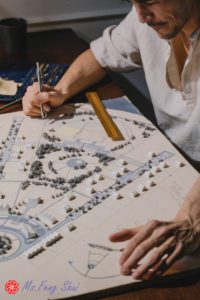
Feng shui, an ancient Chinese practice, is all about creating balance and harmony in your surroundings. When applied to landscape design, feng shui can help create outdoor spaces that are not only visually appealing, but also promote a sense of well-being for those who use them.
Here are 5 feng shui tips for landscape architects to consider when designing outdoor spaces:
- Choose plants and materials that are in harmony with the surrounding environment. Feng shui encourages the use of natural materials, such as wood, stone, and plants, because they are believed to bring a sense of balance to the environment.
- Consider the five elements in your landscape designs. In feng shui, the five natural elements (wood, fire, earth, metal, and water) are believed to have their own unique energies. Incorporating these elements into your design helps create balance and harmony in the outdoor space.
- Pay attention to the direction of the space. In feng shui, different directions are associated with different energies. For example, fire energy should be placed at the rear of the property, as it can bring warmth and joy. The front of the property, on the other hand, should have water energy, which can bring calm and serenity. The bagua map is a great tool for helping with this.
- As shape and form is important in all architectural designs, use curves and soft lines in your landscape plans. Straight lines and sharp angles are believed to create tension and imbalance in feng shui. Using curves and soft lines in your design can help create a more peaceful and harmonious outdoor space.
- Incorporate water features. Water is a powerful symbol in feng shui, as it represents flow and movement. Incorporating a water feature at the front of the property facing towards the home, such as a fountain or pond, can bring a sense of calm and balance to the outdoor space.
By incorporating these feng shui principles into your landscape designs, you can create outdoor spaces that not only look beautiful, but also promote a sense of well-being for those who use them.
There is so much more to an integrative approach of feng shui in landscape design to harness qi (or chi) energy, including color theory, sustainability, culture, yin & yang, etc.
I have vast experience helping landscape architects incorporate feng shui into their designs. Tell me a little about your project here:
I am a 3rd generation feng shui expert and have helped thousands of people add harmony and balance to their homes and offices without making it look like a Chinese restaurant exploded.
I can help you attract the life that you deserve with feng shui. Contact me today!
Feng Shui for Land Developers: Incorporating Harmony and Balance in Your Projects
As a land developer, you understand the importance of creating functional and aesthetically pleasing spaces for your clients. However, have you considered incorporating the principles of feng shui into your real estate development projects?

Feng shui, a Chinese philosophy that translates to “wind and water,” is the practice of creating harmonious and balanced environments through the intentional placement of objects and structures. It is believed that the energy or “qi” (pronounced “chi”) of a space can greatly impact the prosperity and well-being of those who inhabit it.
By incorporating feng shui principles into your land development projects, you can not only enhance the overall aesthetic and functionality of the space, but also appeal to a wider range of potential buyers or tenants who value holistic living.
Here are a few tips for incorporating feng shui into your land development projects:
- Choose the right location during the land assessment & acquisition phase. You know the mantra: “location, location, location.” The location of a property is one of the most important factors in determining its feng shui. The property should be very easy to access and it should not be land-locked. Ideally, developers should look for properties that are located in areas with positive chi, such as areas with some flowing water, rolling hills, and/or trees.
- Create a balanced layout during the design & site planning phase. The layout of a property should be balanced and symmetrical. This means that the front of the property should be equal in size to the back, and the left side should be equal in size to the right side. For great feng shui, I love rectangles and other symmetrical shapes.
- Keep the property clean and clutter-free. Clutter can block the flow of chi in a property. During the feasibility studies, financial planning, regulatory approvals, environmental assessments, design, and planning stages, developers should keep their properties clean and clutter-free to ensure that the qi can flow freely. There should be essentially nothing on the property except during the grading and construction phases. Even then, keep it organized for the sake of safety and prosperity.
By considering these tips and incorporating feng shui principles into your property development projects, you can create functional and harmonious spaces that appeal to a wide range of clients. Not only will this enhance the overall aesthetic and functionality of the space, but it can also contribute to the prosperity and well-being of those who will eventually live or work there.
There is so much more to an integrative approach of feng shui in land development to harness qi energy, including sustainability, directional alignment, the five elements, yin & yang, etc. I have vast experience helping land developers select and acquire land, as well as in helping them incorporate feng shui into their site plans. See all of the projects I’ve worked on. Tell me a little about your project here:
I am a 3rd generation feng shui expert and have helped thousands of people add harmony and balance to their homes and offices without making it look like a Chinese restaurant exploded.
I can help you attract the life that you deserve with feng shui. Contact me today!
5 Feng Shui Tips for Decorating Hotel Resorts
Decorating a hotel resort can be a daunting task, but incorporating feng shui principles into the design can help create a harmonious and welcoming atmosphere for guests. Here are 5 feng shui tips to keep in mind when decorating a hotel resort:
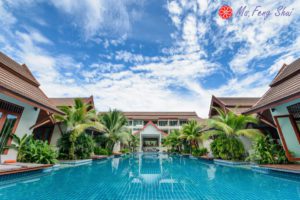
- Choose calming colors: Soft, neutral colors such as beige, light blue, and green can help create a soothing atmosphere. Avoid bright, bold colors, as they can be overstimulating. Just make sure to add the colors to the appropriate areas.
- Incorporate natural elements: Bringing the outdoors inside can help create a sense of balance and harmony. Consider incorporating plants, wood accents, and natural materials such as stone or bamboo into the design.
- Use symmetry: Symmetry is an important principle in feng shui, as it helps create a sense of balance and stability. When decorating a hotel resort, try to use symmetrical arrangements of furniture and decor. For instance, balance the bedside with two tables instead of one.
- Pay attention to lighting: Proper lighting is crucial in creating a welcoming atmosphere. Use a mix of natural and artificial lighting to create a warm and inviting space.
- Incorporate water elements to the front of the property: Water is a powerful feng shui element that represents flow and abundance. Consider adding a water feature, such as a fountain or aquarium, flowing towards the hotel resort entrance to promote a sense of tranquility.
By incorporating these feng shui principles into the design of a hotel resort, you can create a space that is not only visually appealing, but also promotes a sense of relaxation and well-being for guests. There is so much more to an integrative approach of feng shui in decorating hotel resorts to harness qi energy, including sustainability, directional alignment, the five elements, etc. You’ll need to consider feng shui in all phases of your projects, including site acquisition, site planning, landscaping, lobby design, room design, interior decorating, etc.
I have vast experience helping hotels & resorts incorporate feng shui through their properties. In fact, see some of the projects I’ve worked on. Tell me a little about your project here:
I am a 3rd generation feng shui expert and have helped thousands of people add harmony and balance to their homes and offices without making it look like a Chinese restaurant exploded.
I can help you attract the life that you deserve with feng shui. Contact me today!
Home Buying Checklist for Good Feng Shui
When the real estate market was hot, it was difficult to even get an offer in on a home. You couldn’t be picky because you would lose a bidding war for a home with good Feng Shui. When interest rates and home inventory are on the rise, it’s even more difficult to sell a home. But that’s a good thing if you’re looking to buy a home with great Feng Shui.

When I work with home builders, I advise against site plans that include cul-de-sacs, T-intersections, overhead power lines, etc. This is especially important in Feng Shui aware areas. If home builders don’t take my advice, they are forced to significantly reduce pricing to unload bad Feng Shui homes. But how do we know what homes for resale have good or bad Feng Shui?
Why Feng Shui?
If you’re not a believer in Feng Shui, that’s fine. Please note, however, that most of the Feng Shui suggestions I provide also have more modern and practical reasoning. Additionally, you can sell a home with good Feng Shui faster and for more money. You like money, don’t you?
The following checklist will help if you’re looking to buy or build a home with good Feng Shui. However, this is not meant to be an exhaustive list of all that is good or bad in Feng Shui. Avoid homes that don’t keep with the checklist below. This is your best option because such home issues are difficult to remedy. Any issues missing from this list are likely relatively easy to cure later during an individualized Feng Shui consultation. Feel free to contact me if you have any questions.
Street Location
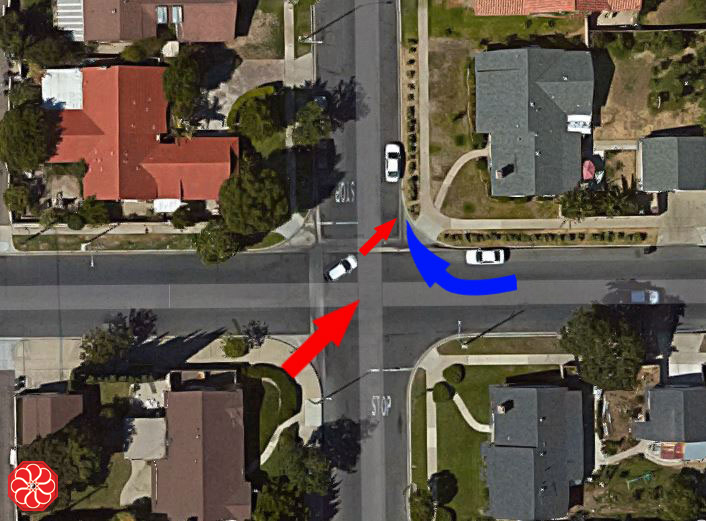
⬜ No Corner Lot: I know… corner lot homes come with some extra land. But, they also provide bad Feng Shui. An overwhelming amount of energy inundates corner lot homes, so they should be avoided at all costs. From a practical sense, corner lot homes also have more disturbances like car and foot traffic. More info…

⬜ No T-Intersection: Overwhelming energy is also an issue for homes at a T-intersection. This is especially true of those at the top of the T. You’ll notice also that such homes often have concrete blocks along their sidewalks. That’s because sometimes cars end up mistakenly driving right into the house. Avoid homes at a T-intersection. More info…
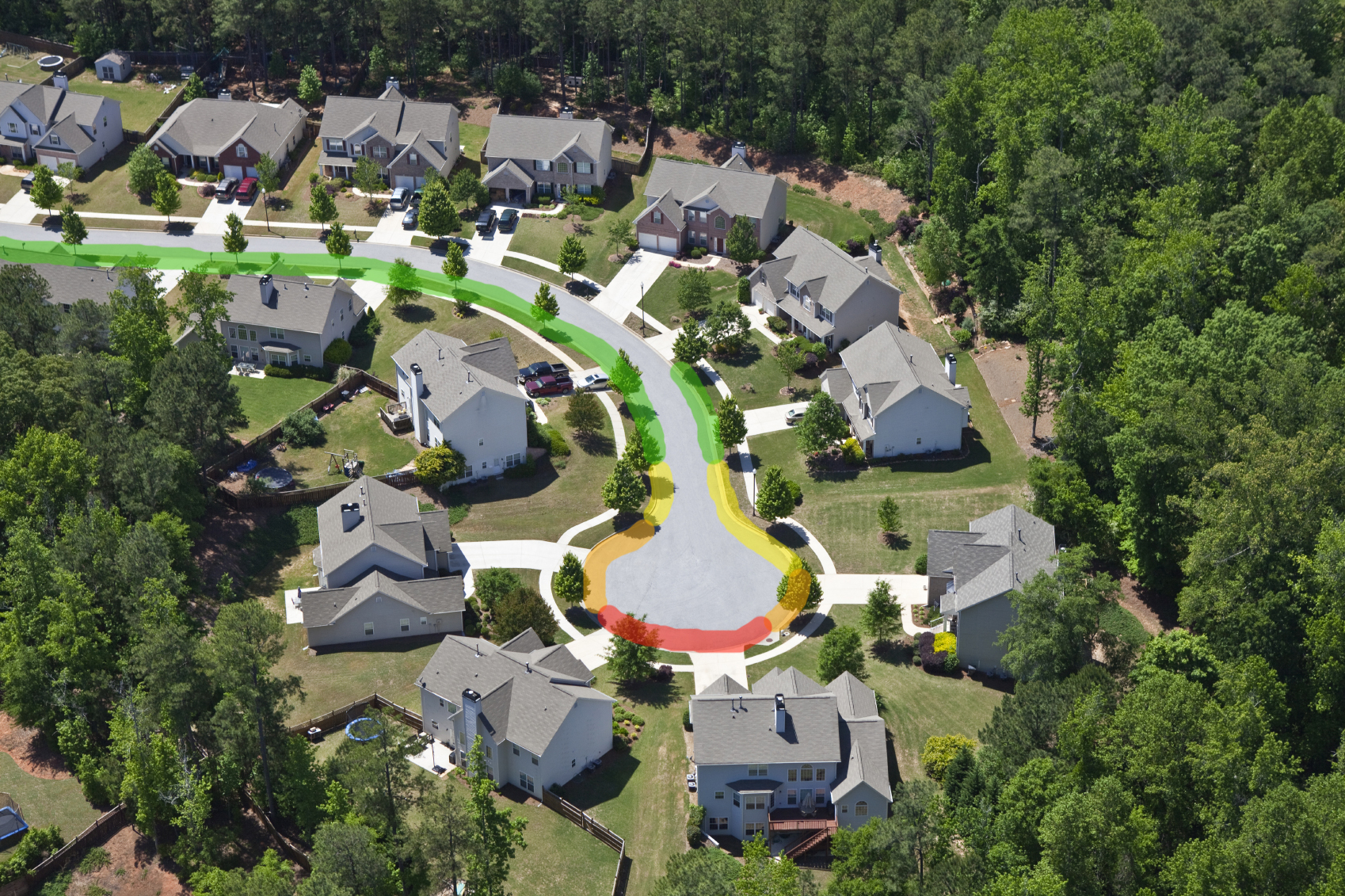
⬜ No Cul-de-sac: Cul-de-sac homes can seem great because the kids can play street hockey. However, if you want to avoid potential money and health issues, avoid buying a home on a cul-de-sac. Its energy sweeps through like a vortex. Headlights from cars turning in front of the home also cause a frequent disturbance. More info…
Home Surroundings
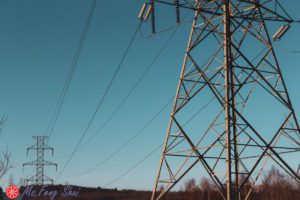
⬜ No EMF Radiation: If you’ve read my blog post on electromagnetic fields (EMF), you’ll know that we should probably avoid sources of electrical energy. Anecdotally, I have found that they disturb sleep. The jury is still out on several studies that may prove more harmful effects of EMF. Have you ever stood under major power lines and heard zapping or humming sounds that they emit? Yeah, I would just completely avoid homes near, and especially under, major power lines, cell towers, etc. If you can measure the EMF from the house, absolutely avoid it. More info…
⬜ No Cliffs: Stay away from homes at the top of a cliff. It doesn’t matter whether it is at the front or back of your home. While the view might be amazing, you just won’t get the positive energy you need. It would be better to have a home that backs up to a hill that is higher than your home. This helps capture the flow of any energy headed your way. Just make sure there aren’t any loose rocks up there!
⬜ No Large Bodies of Water: Avoid large bodies of water behind your home. This will douse your Fame & Reputation Area. Having a view of the lake or ocean in front of your home, however, is just fine because it supports your Career Area. Just don’t be right along the shoreline because that energy can be overwhelming.
⬜ Not Below Street Level: The vertical location of the base of the home compared to the street level is rather important in Feng Shui. The best scenario is if the bottom of the home is a little higher than the street level. We want to avoid homes that are lower than the street level because career opportunities will pass over you and because those homes are more prone to flooding.
⬜ Front Door Visible From Street: The front door should be clearly visible from the street. This ensures that positive energy can flow to your home. Objects like large trees block visibility from the street and therefore block energy coming into your home. If there is a small tree, see if there are any rules that would prevent you from moving it. More info…
⬜ Front Door Doesn’t Face Neighbors’ Doors: To avoid confrontations with your neighbors, make sure that your front door does not directly face any of your neighbors’ doors.
Home Shape Aligns with Bagua
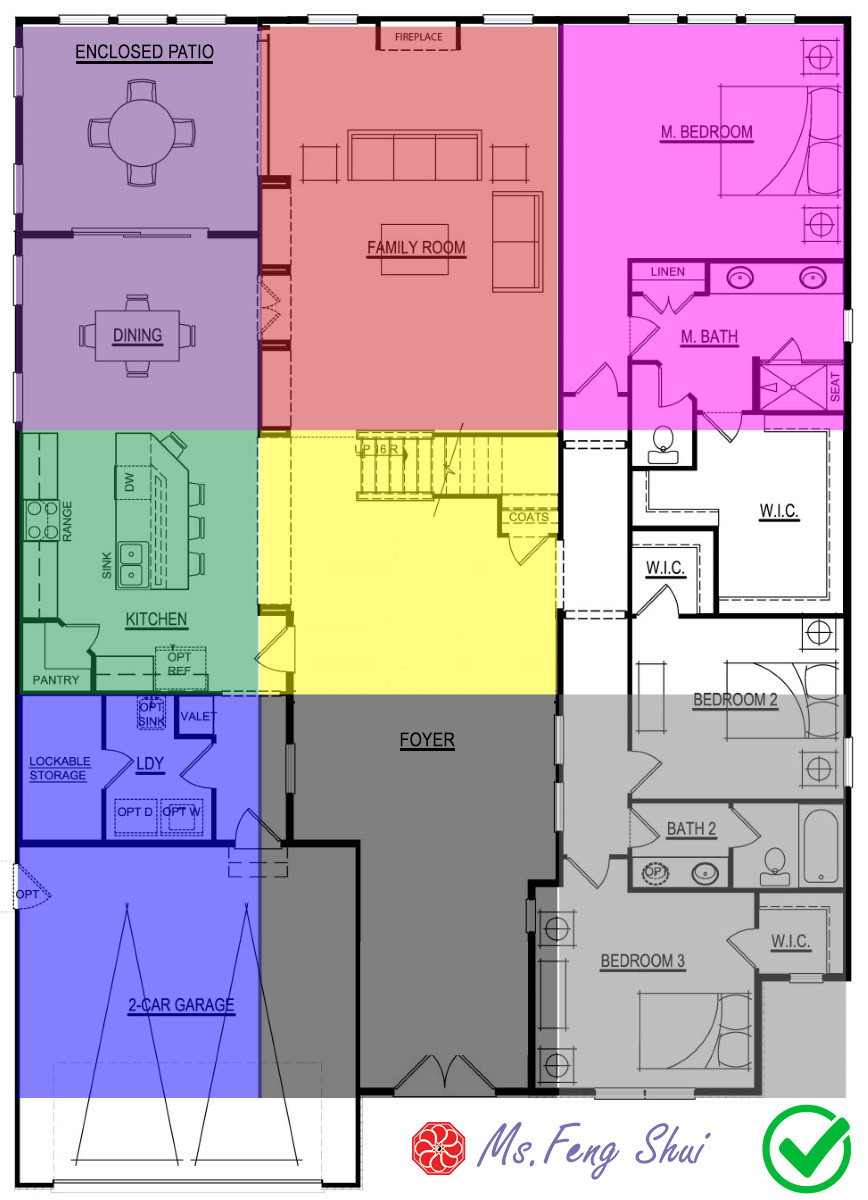
⬜ Rectangular Shape: I only suggest homes that have a top-down view of the home that is generally rectangular in shape. This helps so that it can match with the Feng Shui Bagua. Otherwise, I would avoid purchasing it. More info…
⬜ Front Door Location: Make sure that the front door is aligned with the outside edge of the rectangular outline of the home. Avoid homes with recessed front doors. Any parts of the home hanging out beyond the door will be outside of your Bagua.
⬜ No Missing Sections: If there is a significant section of the rectangle missing (L-shape or C-shape, for instance), you are likely missing an important section of the home’s Bagua. The most common missing areas are the Prosperity & Wealth Corner and the Love & Relationships Corner.
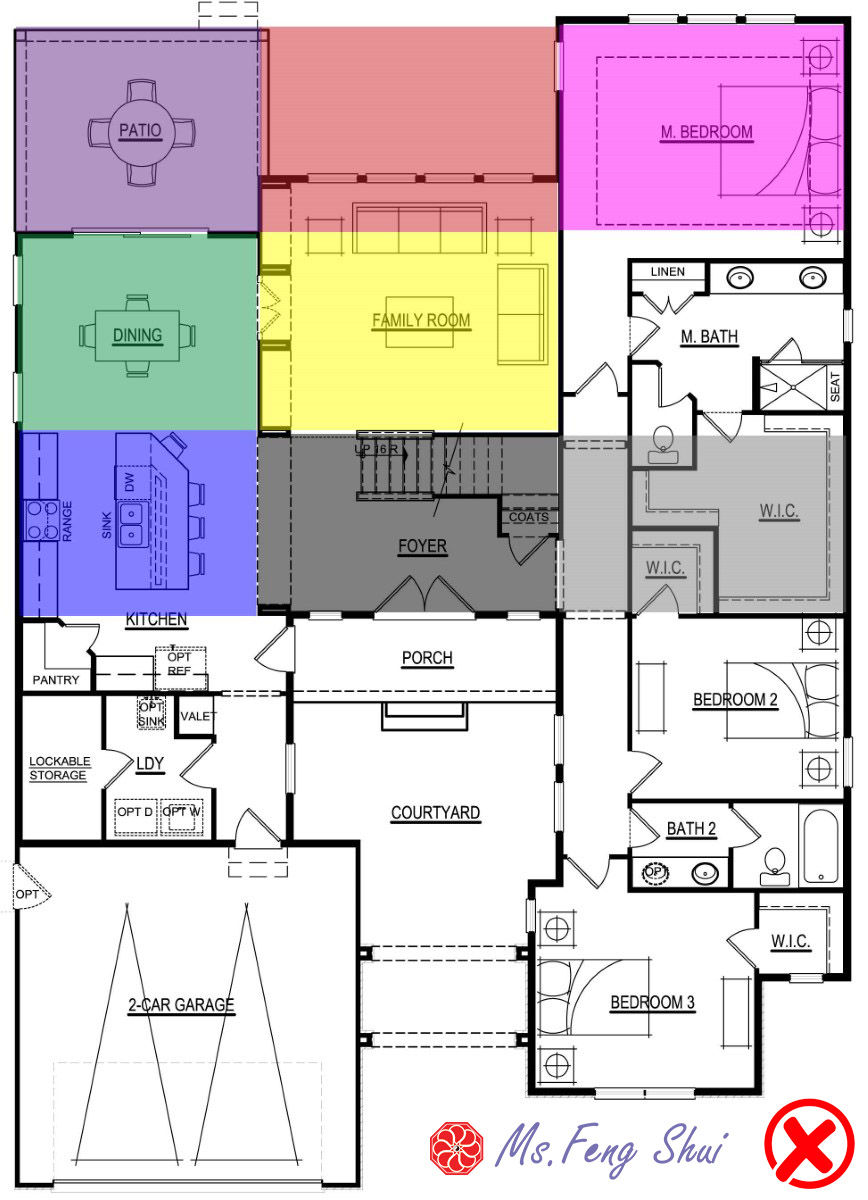
⬜ No Protrusions: If a section of the home is protruding out (other than just the garage), that area will be outside of your Bagua. Anyone in that space would feel left out and any designated functions in those spaces, such as a home office, may be ineffective.
⬜ No Open-Air Courtyards: If you have an open-air courtyard in the middle of your home, you are likely missing an important section of the home’s Bagua for your Health Area.
Inside the Home
⬜ No Front & Back Door Alignment: Try to avoid homes where the front door directly lines up with the back door in your sightline because your energy will just flow right out the back. More info…
⬜ Front Door Energy Flow: If you don’t want your energy to go down the drain, you do not want to see a bathroom or the kitchen when you open your front door. When you open your door to walk in the home, you should not immediately face stairs, another door, or a wall because you want energy to flow more freely through the downstairs areas.

⬜ Bedrooms in Back: In general, all bedrooms should be in the back part of the house. This is especially important for small children in your family. If you want calm, rested children, having them see the street from their bedrooms might be counterproductive. More info…

⬜ No Spiral or Grand Staircases: Consider a spiral staircase to be like a corkscrew, harmfully digging into a particular section of the Bagua in the home or office. Because of their often-circular nature, any energy that flows up the left side of a grand staircase just goes right back down the right staircase, completely bypassing much of the second floor of the home. More info…
Next Steps
⬜ Make an Offer: Timing is sometimes of the essence when making an offer on a house, but that doesn’t mean you should rush through a purchase without doing your due diligence. Make an offer with an inspection contingency, during which time you can make sure that the house is perfect as a home. More info…

⬜ Schedule a Feng Shui Review: Contact me to schedule a review before removing contingencies. This way, we can confirm that there aren’t any other major issues to be concerned with before you commit to the purchase. More info…
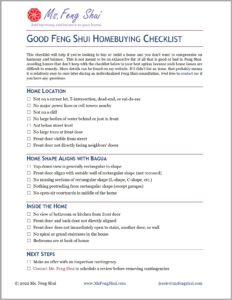
Through my inexpensive Feng Shui Real Estate Review, I have helped thousands of people analyze homes they are looking to potentially buy to make sure they are getting a house with great Feng Shui. I also provide more thorough Feng Shui consultations for recently purchased homes without requiring investment in a bunch of silly trinkets. I can do the same for you with a Feng Shui Video Consultation.
What to Know About Asian Homebuyers
From NewHomeSource Professional

When working with Asian homebuyers, belief systems like Feng Shui and Vastu could affect the way they invest in new homes.
In major population hubs like New York City, San Francisco and Los Angeles, this trend is especially apparent as these investors indicate an outbound capital flow from their home countries by investing in American industries like agriculture, technology and, of course, real estate.
In fact, Forbes reports that Chinese nationals have become the largest foreign buyers of American homes. In this industry, home purchases by China’s new wealthy class have grown to a staggering $93 billion in value, with $29 billion coming in 2015 alone.
So, with evidence pointing to this surge in Asian national buyers, you may be thinking: “How can I help this type of client find a new home that suits their needs?”
While Asia is a giant continent with numerous countries with their own cultural beliefs, there may be a few considerations you’ll want to have in mind when assisting Asian homebuyers.
Take the Time to Understand Their Customs
Many homebuyers coming from Asian countries have customs and belief systems that directly affect the homes they can buy — from the direction the home is facing to the history of the land it is built upon.
Two common belief systems to keep in mind with some Asian buyers are Feng Shui and Vastu, which have certain rules regarding a home’s architecture and energy flow.
“Realtors dealing with newly built homes should know the site layouts and designs,” says Jessie Kim, a Feng Shui consultant in Southern California who often works with homebuilders and investors on catering to this Chinese philosophy. “What is going to be built around the properties, home addresses and what types of landscaping plans and materials will be used around the homes are important things to consider.”
With Feng Shui, some common things to avoid are “T” intersections, cul-de-sacs, corner lots, a front door facing the back door or window, stairs and bathrooms facing the front door, kitchens and bathrooms facing or back-to-back to each other and bathrooms directly above the kitchen. You’ll also want to focus on showing homes with a front door that faces south or southeast.
“There are ways to remedy most of these issues, but the less Feng Shui remedies you have to do to the house, the better the home is,” says Kim.
And with Vastu, a Hindu architecture system, the direction of the front door is also very important, as well as having a dedicated space for spiritual statues.
“Just like with Feng Shui, there are different layers that the buyers will be considering, so it’s important to ask the what their Vastu needs and wants are, besides just asking for the number of bedrooms and bathrooms they want in their home,” advises Kim.
A simple question-and-answer session with your clients can help bring to light any of these cultural beliefs and requirements so you can find a home that suits them perfectly.
“Just try to learn about their custom,” adds Kim. “Simple things like taking off your shoes when entering their home will make the homeowners feel comfortable that you are understanding of their culture.”
Discover Their Reason for Buying
The next tip is a simple one: Just find out why they are buying.
“You have to think about what their reasoning is,” says Joan Brothers, president of Manhattan Boutique Real Estate in New York. “And there’s a lot of different reasons why people are coming from Asia to the United States and buying real estate as assets, whether they’re using it for their residential property or as an investment.”
With Chinese investors specifically, there are different levels of buyers. For years, wealthy buyers have been looking to foreign countries to invest their money and now the middle class have been increasingly doing the same thing.
“The main thing will be to send their children to school out of their country,” says Kim. “So by investing in a home in the U.S., they are able to set up residence and when their children are older, they are able to go to school in the U.S. without having to be an international student.”
Having insight to what they want in a new home, whether it be for a residence for their family or just as an investment asset, can better enable you to find a property that fits their needs.
“And diversifying assets is a really good thing to do,” adds Brothers. “It’s either family or business, personal use or for investment.”
Family-Friendly Values
And if you discover that they are looking for a home to set up residence, the next thing to consider is their family values.
“These types of buyers are looking for a home that they can ‘share’ with their family,” says Kim. “Maybe not full time, but they are always aware of possibilities of their families coming to visit and staying with them for extended periods of time.”
So, it may be important to find them a home with an extra bedroom on the ground level or options for multigenerational living. Close proximity to parks, shopping and schools with good ratings would be another major plus, adds Kim.
It’s also wise to make sure you keep everyone involved in the process feeling just that — that they are involved.
“Buying a home is mostly a family decision,” says Sylvia Yang, a sales representative for Brookfield Residential in Azusa, Calif. “Parents and grandparents will often gift the down payment and they need to confirm they like the location and floor plan as well.”
Tying it all together, it really comes down to genuine and personal conversation and asking questions.
“If you can make simple conversation and are interested in the client’s culture, you can create trust and a long-term relationship with them,” says Brothers.
Drew Knight is the Digital Content Associate for Builders Digital Experience (BDX). You can find him online at LinkedIn.
Jessie Kim is a 3rd-generation certified Feng Shui consultant and experienced real estate investor that frequently works with home builders. You can find her online at www.msfengshui.com.
Originally posted at: